Face Reading
Introduction
Face Reading, also known as Mian Xiang in Chinese, is a traditional practice rooted deeply in Chinese culture and traditional Chinese medicine. It is an art that seeks to determine various aspects of a person’s character, personality, and potential health by analyzing their facial features. This ancient art form employs the principles of the five phases, or Wuxing - namely Wood, Fire, Earth, Metal, and Water - which are metaphors devised by ancient Chinese philosophers to explain the relationships and interactions of all things in the universe. Over the centuries, Face Reading has evolved and adapted, but it continues to be an integral part of Chinese tradition, influencing various aspects of life such as interpersonal relationships, health assessments, and understanding personality traits.
History of Face Reading
The origins of Face Reading can be traced back to ancient China, where it was practiced as part of physiognomy and fortune-telling. Early records of this art form can be found in classic Chinese texts such as the "Book of Rites," which contains observations about the correlation between facial expressions and an individual's emotional state or character traits. Historically, Face Reading has been employed by notable figures such as Fan Li of the State of Yue. He used it to predict that his leader, Gou Jian, showed signs of traits that would allow them to endure hardship but not enjoy peace. Such instances highlight the belief in the power of Face Reading to influence decisions and predict future events.
During the Song Dynasty (960-1279), an example of Face Reading's application was with Wang Anshi, a prominent statesman whose facial features were said to signify good fortune and a favorable disposition. The practice was not limited to the elite; it permeated all levels of society and was used to assess everything from leadership qualities to matrimonial prospects. The historical trajectory of Face Reading showcases its deeply ingrained place within Chinese culture and its evolution over time from a mystical art to a more systematized practice.
Principles of Face Reading
Facial Features and Their Meanings
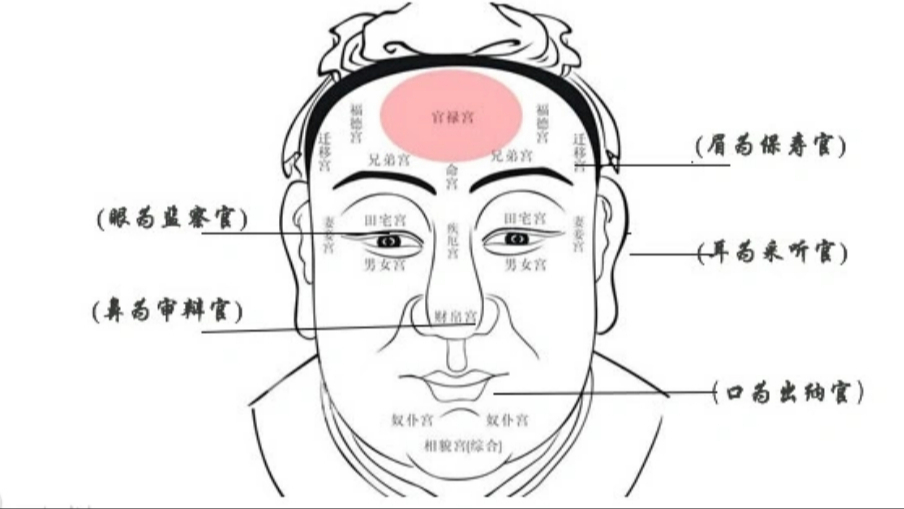
In Face Reading, the analysis begins with understanding the "three parts of the face" or "san ting," which include the upper part (shang ting), middle part (zhong ting), and lower part (xia ting). Each section is believed to represent different stages of a person’s life: the upper part corresponds to youth (ages 10 to 20), the middle part to adulthood (ages 20 to 40), and the lower part to the later adult years (after age 40). The "five organs" on the face (wu guan) - ears, eyebrows, eyes, nose, and mouth - are also key indicators in Face Reading, each possessing unique meanings and implications about a person's life and character.
Face shapes are categorized into ten distinct types, with each shape believed to harbor specific personality traits and destinies. Additionally, the "Twelve Houses" (shi er gong) on one's face represent different life aspects such as wealth, career, marriage, and health. These categories provide insights into an individual's life journey, potential fortunes, and challenges.
Yin-Yang and Wuxing Theory
Face Reading is deeply intertwined with the Yin-Yang and Wuxing theories, which are foundational concepts in Chinese philosophy and medicine. These theories propose that all phenomena in the universe can be categorized into five elements: Wood, Fire, Earth, Metal, and Water. Each element is associated with specific facial features and health aspects. For instance, a person with a predominant "Wood" element might exhibit facial features that suggest creativity and benevolence, whereas a "Metal" element might indicate resilience and determination. By understanding these associations, practitioners of Face Reading aim to interpret the balance of elements in a person's face to infer their personality traits and possible life outcomes.
Techniques of Face Reading
Physiognomy
Physiognomy, a key technique in Face Reading, involves assessing the physical appearance of a face to deduce character traits and potential future occurrences. This practice is based on the belief that the external appearance is a reflection of the inner self. Physiognomists carefully examine facial structures, expressions, and features such as the shape of the eyes, the alignment of the nose, and the contours of the chin. Each feature is meticulously analyzed to uncover hidden truths about an individual's personality and fate. This technique emphasizes the importance of detailed observation and interpretation of subtle facial cues.
Mian Xiang
Mian Xiang, or the Chinese art of Face Reading, incorporates a holistic approach that combines traditional Chinese medicine principles with metaphysical insights. The practice emphasizes the interconnection between facial features and the five elements, and how these can reveal insights into a person's health, character, and destiny. Techniques in Mian Xiang include reading the "nei xiang" (internal aspects of the body) and "gu xiang" (bone structure), as well as observing "dong xiang" (movement) and "sheng xiang" (sound). Mian Xiang practitioners use these techniques to provide comprehensive readings that address various aspects of an individual's life, offering guidance and predictions based on facial analysis.
Cultural Significance
Face Reading holds significant cultural importance in Chinese society, influencing various aspects of life, from personal relationships to business decisions. It is often consulted in choosing marital partners, understanding children's personalities, and assessing potential business partners' traits. Historically, individuals with certain favorable facial features were believed to possess qualities that would lead to success and harmony, while others were scrutinized for possible shortcomings. Beyond personal applications, Face Reading has also played a role in shaping perceptions of beauty and aesthetics throughout Chinese history, as it ties physical appearance to notions of fortune and prosperity.
Face Reading in Modern Times
In contemporary society, Face Reading has experienced a revival, with increased interest in Eastern philosophies and holistic practices. Numerous schools dedicated to teaching Mian Xiang have emerged, offering courses and workshops to those interested in learning the art. Modern Face Reading often integrates traditional techniques with new understandings of psychology and personal development, appealing to individuals seeking self-awareness and personal growth. Additionally, the practice has found new applications in areas such as human resources and business negotiations, where understanding non-verbal cues and facial expressions can provide a competitive edge.
Criticisms and Skepticism
While Face Reading continues to be practiced and respected by many, it also faces criticism and skepticism, particularly from the scientific community. Critics argue that the practice lacks empirical evidence and relies heavily on subjective interpretations. The deterministic nature of some Face Reading claims is also questioned, as it can potentially lead to stereotypes and misconceptions about individuals based solely on their appearance. Despite these critiques, proponents of Face Reading maintain that it offers valuable insights and serves as a tool for self-reflection and understanding human behavior.
Face Reading in Popular Culture
Face Reading has permeated popular culture, appearing in films, television shows, and literature as a mystical and intriguing practice. It is often depicted as an ancient art with the power to reveal hidden truths and predict future events, captivating audiences with its enigmatic allure. In modern media, Face Reading is sometimes portrayed in the context of mystery and suspense, where characters use the practice to uncover secrets or navigate complex social dynamics. Its presence in popular culture continues to spark curiosity and fascination, drawing individuals to explore the ancient art of Face Reading for themselves.








